
Midea Duo Review
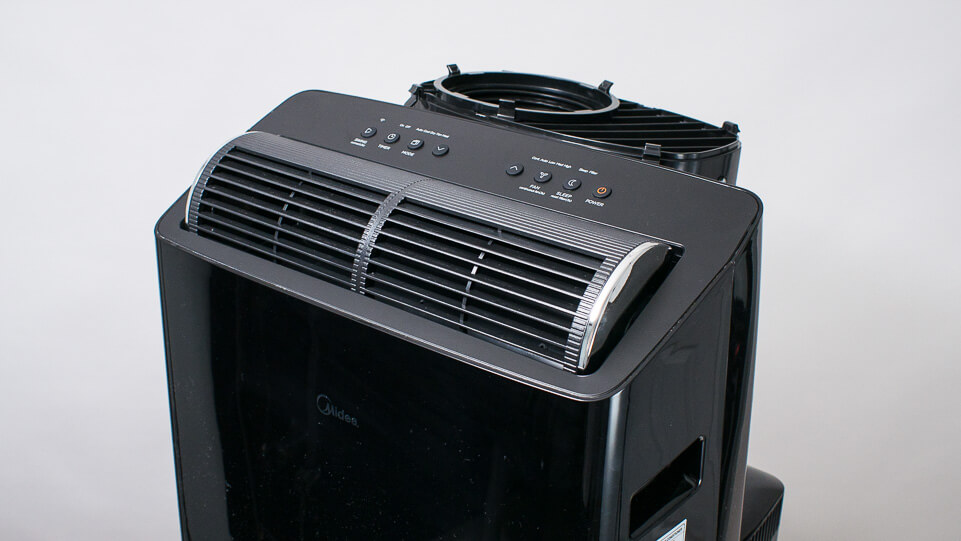
Initial Analysis
Cooling Capacity
The Midea Duo (MAP14S1TBL) offers 14,000 BTUs of cooling capacity under older ASHRAE guidelines for measuring cooling capacity. Under newer US DOE guidelines it offers 12,000 BTUs of Seasonally Adjusted Cooling Capacity (SACC).
Compared to ASHRAE BTUs, SACC BTUs are much more representative of the actual cooling capacity of a portable air conditioner.
In our 150 sq. ft. test room, units with the same ASHRAE BTUs performed dramatically differently depending on their SACC BTUs.
14,000 ASHRAE BTU units with more than 9,000 SACC BTUs, like the Midea Duo (12,000 SACC BTUs), lowered room temperature from 90° F down to 80° F in approx. 10 minutes and down to 72° F in approx. one hour.
14,000 ASHRAE BTU units with less than 9,000 SACC BTUs, like the Black + Decker BPACT14WT (7,700 SACC BTUs), lowered room temperature from 90° F down to 80° F in approx. 30 minutes and down to 75° F in approx. 2 hours. They could not achieve a room temperature of 72° F.
With 12,000 SACC BTUs, the Midea Duo has the most actual cooling capacity of any portable AC unit on the market.
Buying the Duo ensures that you’ll be able to cool as fast as possible and cool any type of environment just about as well as any portable AC unit is able to cool it.
| Model | ASHRAE BTUs | SACC BTUs |
|---|---|---|
| Midea Duo (MAP14S1TBL) | 14,000 | 12,000 |
| Black + Decker BPP10WTB | 14,000 | 10,000 |
| Frigidaire FHPW142AC1 | 14,000 | 10,000 |
| LG LP1419IVSM | 14,000 | 10,000 |
| Whynter ARC-14S | 14,000 | 9,500 |
| Delonghi PACEX390LVYN | 14,000 | 8,600 |
| Black + Decker BPACT14WT | 14,000 | 7,700 |
Energy Efficiency
The Duo draws just as much power as most other 14,000 ASHRAE BTU units on the market. The difference is that it’s much more efficient taking that power and turning it into actual cooling capacity - that is to say, seasonally adjusted cooling capacity.
It draws 1300 watts of power but provides 12,000 SACC BTUs of cooling capacity. This gives it a SACC/watt ratio of 9.2. Its closest competitors in the 14,000 ASHRAE BTU category have a SACC/watt ratio of 8.0.
The table below also lists the CEER – or Combined Energy Efficiency Ratios – for some of the most popular 14,000 ASHRAE) BTU units on the market. The previously mentioned SACC/watt ratio only accounts for energy efficiency on a portable AC unit’s cooling mode. CEER accounts for energy efficiency on all modes – not just cooling mode (modes like dehumidifier mode and fan only mode).
By either metric (SACC/watt or CEER), the Duo is the most energy efficient portable AC unit on the market.
| Model | SACC | CEER | SACC/watts |
|---|---|---|---|
| Midea Duo (MAP14S1TBL) | 12,000 | 12.3 | 9.2 |
| Black + Decker BPP10WTB | 10,000 | 7.9 | 8.0 |
| Frigidaire FHPW142AC1 | 10,000 | 7.8 | 8.0 |
| LG LP1419IVSM | 10,000 | 7.9 | 7.3 |
| Whynter ARC-14S | 9,500 | 7.69 | 7.3 |
| Delonghi PACEX390LVYN | 8,600 | na | 6.4 |
| Black + Decker BPACT14WT | 7,700 | na | 5.3 |
Inverter Technology
The Duo does feature an inverter (variable speed) compressor, which allows it to run at a lower cooling capacity at a lower power draw on lower settings (low or medium instead of high).
Most other portable AC units use a single stage compressor – they only run at maximum cooling capacity with maximum power draw at all times.
Setting the Duo to medium or low drastically reduces its noise output and power draw, but running it on these lower settings does come with some caveats.
On lower settings it does produce less noise, but its fan speed no longer masks its compressor noise. On higher settings, the quality of the noise it produces is much better – it’s a much more pleasant noise to listen to.
On lower settings the Duo does draw less power, but it will need to run longer to do the same amount of cooling. On higher settings it draws more power, but its compressor can actually switch off to draw almost no power for longer periods of time.
The bottom line is that this unit’s inverter compressor does give you more flexibility in how you run it, but you’ll rarely want to actually take advantage of this flexibility (running it on lower settings). For the vast majority of the time you’ll likely just want to run it on its highest setting, just like a single stage compressor unit.
Pros and Cons
Pros
- Industry leading SACC – with 12,000 SACC BTUs, the Duo is able to cool faster and cool more challenging (hotter, larger, etc.) environments better than any other portable AC unit on the market.
- Industry leading energy efficiency – with the highest SACC/watt ratio and the highest CEER, the Duo is the most energy efficient portable AC unit on the market.
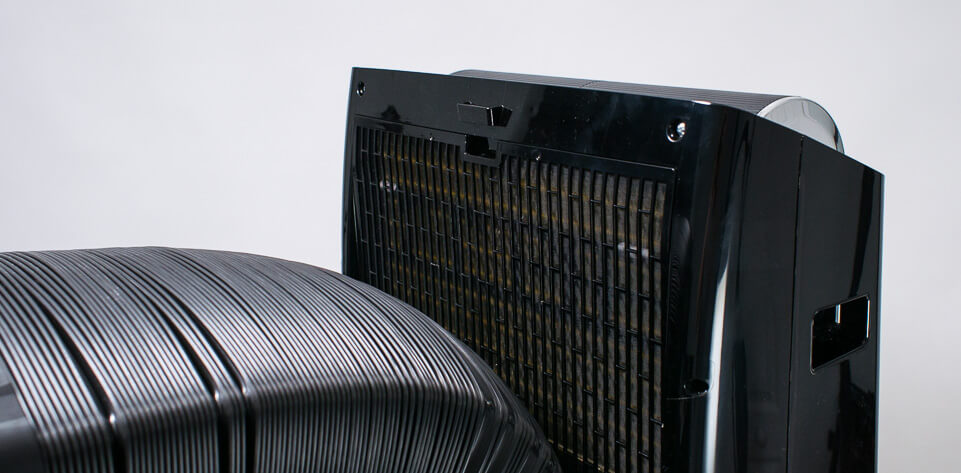
- Good durability – inspecting this unit during testing, we found this unit to have above average build quality for a portable air conditioner.
- High airflow – this unit outputs at 389 CFM. Most competitors output in the 200 to 300 CFM range. The Duo’s high airflow allows it to better project cool air throughout a large room.
- Extensive window kit – this unit features a five piece window kit which allows for its installation in a variety of different window sizes. Many competitors only come with a two piece kit.
- Extensive weather stripping kit and insulation kit – the Duo is the only portable AC unit we’ve tested that comes with window slider foam to insulate the full surface of the window sliders. Competitors only come with weather stripping to seal the edges of these sliders.
- Smart functionality – you can remotely control all of the unit’s settings, including set temperature, using the Midea companion app.
Cons
- The Duo is one of the larger and heavier portable AC units on the market. It weighs 85 lb. and is almost 3 ft. tall. Most competitors weigh in the 70 to 80 lb. range and are a few inches shorter.
- It’s just as loud as competitors. This unit can be set to lower settings at reduced noise levels. But on these lower settings, its fan noise no longer masks its compressor noise, and it won’t cool as effectively. So you’ll almost always want to run it on its highest setting, and on this highest setting it’s just as loud as competitors.



Conclusion
The Midea Duo (MAP14S1TBL) is the best portable air conditioner on the market.
Its actual cooling capacity – that is to say, its seasonally adjusted cooling capacity (SACC) – is greater than that of any other portable AC unit on the market.
This not only allows it to cool faster and to lower temperatures, but also allows it to cool more challenging (larger and/or more difficult to cool) environments much better than its competitors.
The Duo is also the most energy efficient portable AC unit on the market, and it offers good durability, well above average airflow, and an extensive window installation kit.
Overall, the Duo (MAP14S1TBL) gets our highest recommendation as the best portable air conditioner you can buy at this time.
Note: if the MAP14S1TBL is unavailable (if it's out of stock) or if you also require heating functionality, get the MAP14HS1TBL instead. The MAP14HS1TBL is identical to the MAP14S1TBL except that it adds heating functionality.
Additional specifications and notes
Window Kit
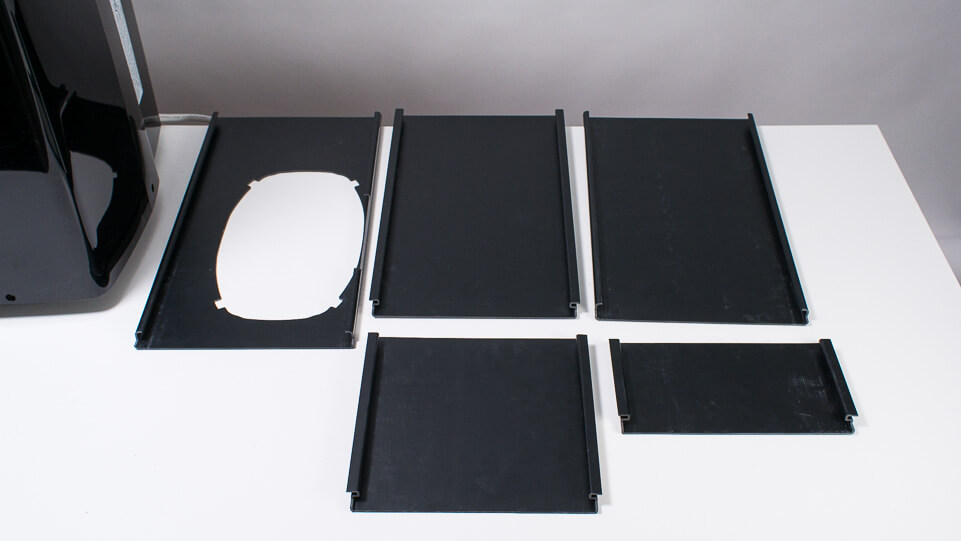
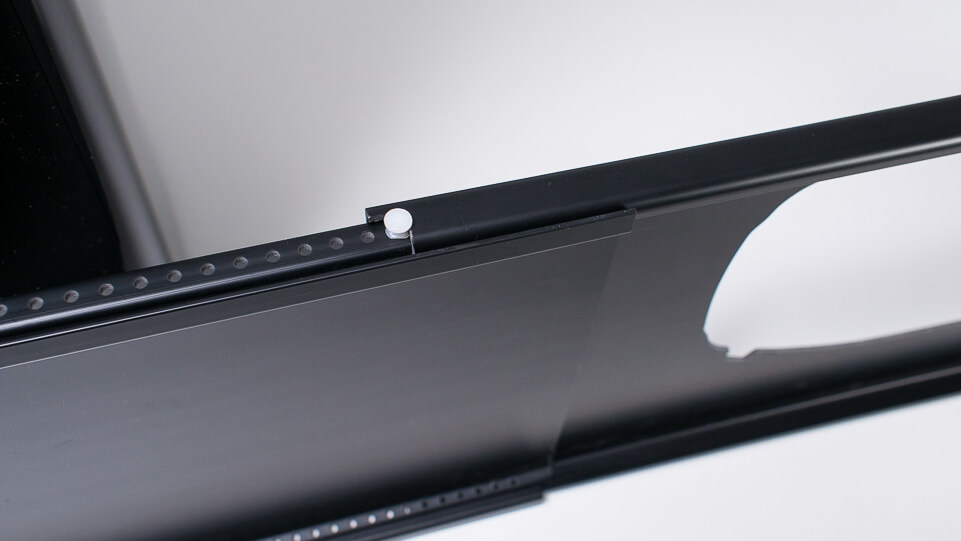

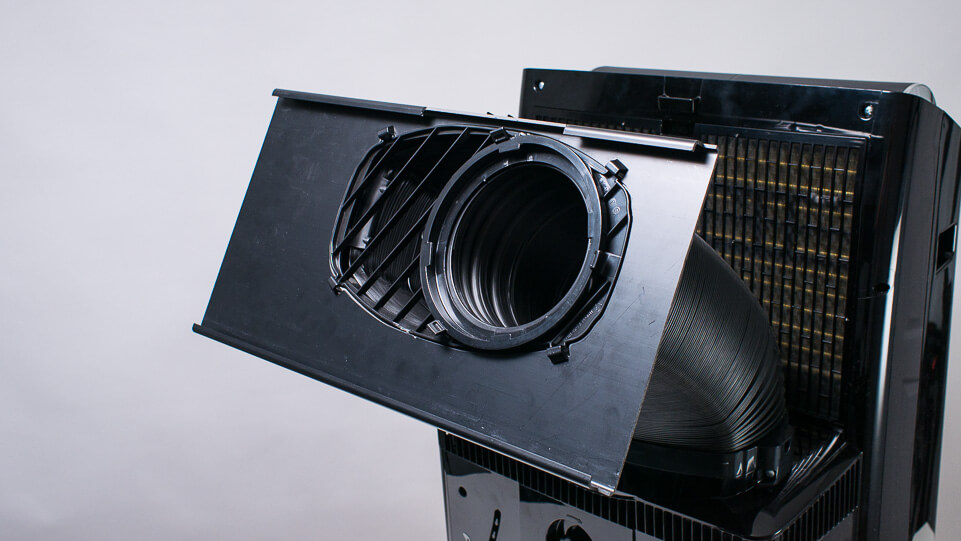
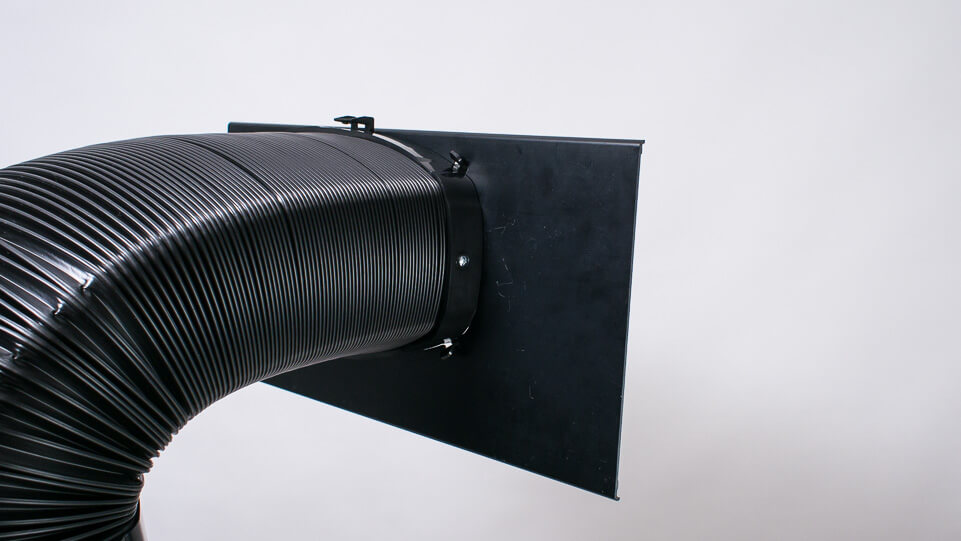


Window Kit Included Parts – 5x window kit parts (primary bracket, short ext [A], med ext [C], long ext x2 [D]), security bracket and 2x screws, 8x bolts (to secure brackets to each other)
Window Kit Adjustment – holes are 3/8" apart (holes in which you can put bolts to secure length)
Window Kit Min. Window Width - 19 1/16" (measured), 19.1" (spec.)
Window Kit Max. Window Width – 63” (measured), 63.8" (spec.)
Weather stripping included – yes, extensive kit included - 4x adhesive foam seals (long), 2x adhesive foam seals (short), 2x seals (long and non-adhesive), 2x adhesive window slider foam (large, flat, and rectangular - fits on actual window slider to insulate it)
Notes
Many competitor window kits only extend from 27” up to 47”. Most competitors do not have as extensive of a weather stripping kit. The Duo is also the only portable AC unit we’ve tested that comes with window slider foam to insulate the full surface area of the window slider.
Hose Connectors
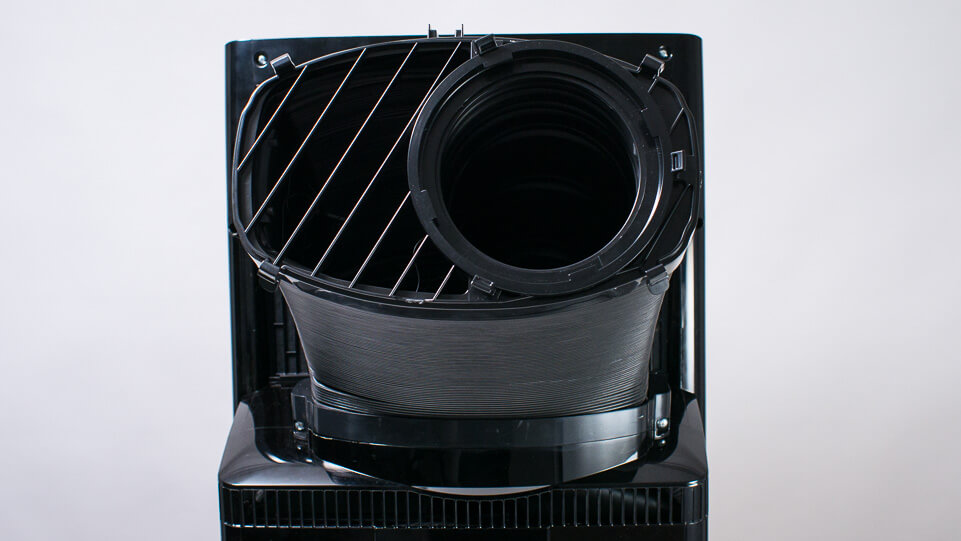


End Adapters – pre-installed? - yes
AC Side Hose Connection – permanently attached
Window Kit Side Hose Connection – align tabs on end adapter of hose with slots in window bracket, push in to lock in place
Hose Length Min/Max – 13 to 45"
Hose Diameter - exhaust = 5"; intake side = varies from 4" to 6.5" on one axis and from 4" to 5" along other axis (approx. 5x5" overall)
Notes
This unit’s hose is slightly shorter than that of many competitors, which have hoses that can extend up to about 60”.
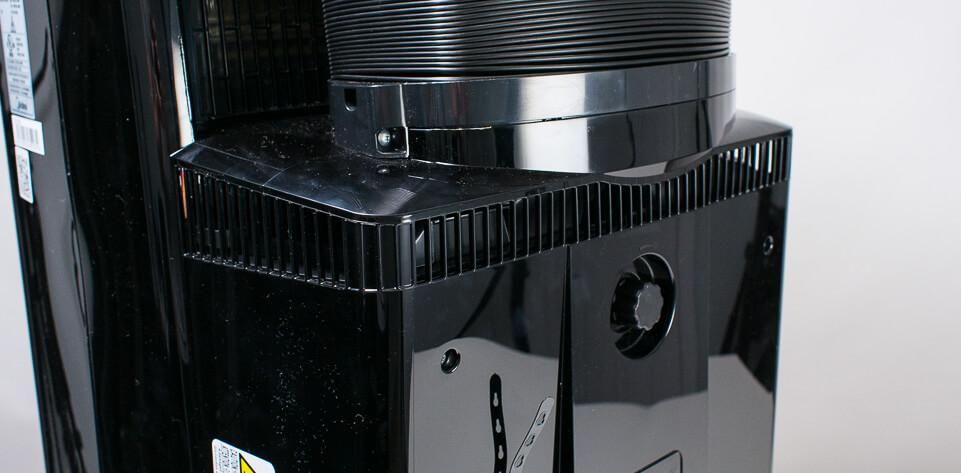
On the positive side of things, the Duo is one of only a handful of models on the market that has its hose permanently attached to its body, which allows for easier storage of the hose. There’s a clip on the back of the unit that keeps the hose upright, attached the to the main body of the portable AC unit, when it’s not installed into a window bracket.
Control
Modes – auto, cool, dry, fan, heat (MAP14HS1TBL only)
Set temp range - 60 to 86° F
Fan speeds - auto, low, med, high
Timer – can be set in half hour increments up to 10 hours, then in one hour increments up to 24 hours
Lights turn off - yes, can be turned off with physical remote and/or companion app
Notes
Most other portable AC units on the market also feature cool, dry (dehumidifier), and fan only modes. Most other units also have a similar set temperature range and timer functionality.
Most competitors do not give you the ability to turn all control panel lights off.
Condensate


Dehumidifier mode pints/day – 124.7 pints/day
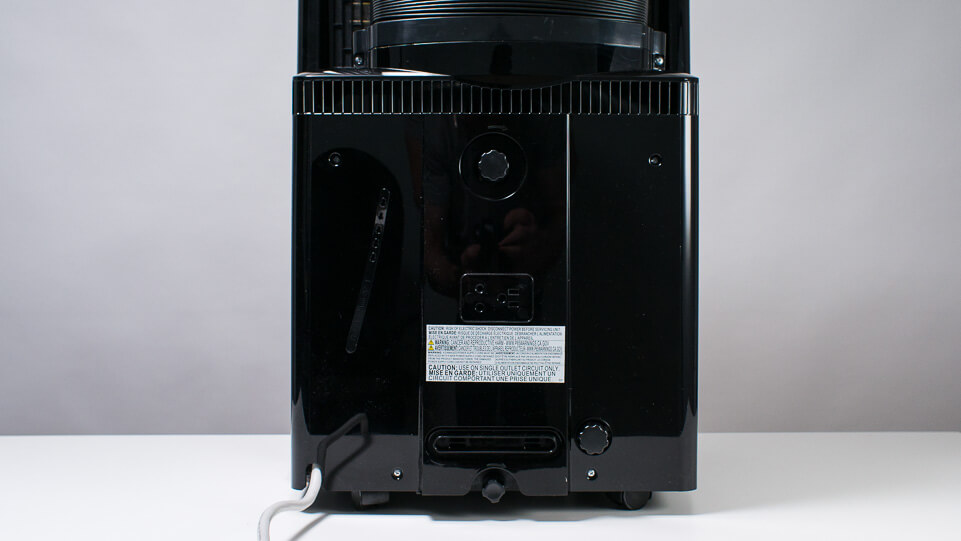
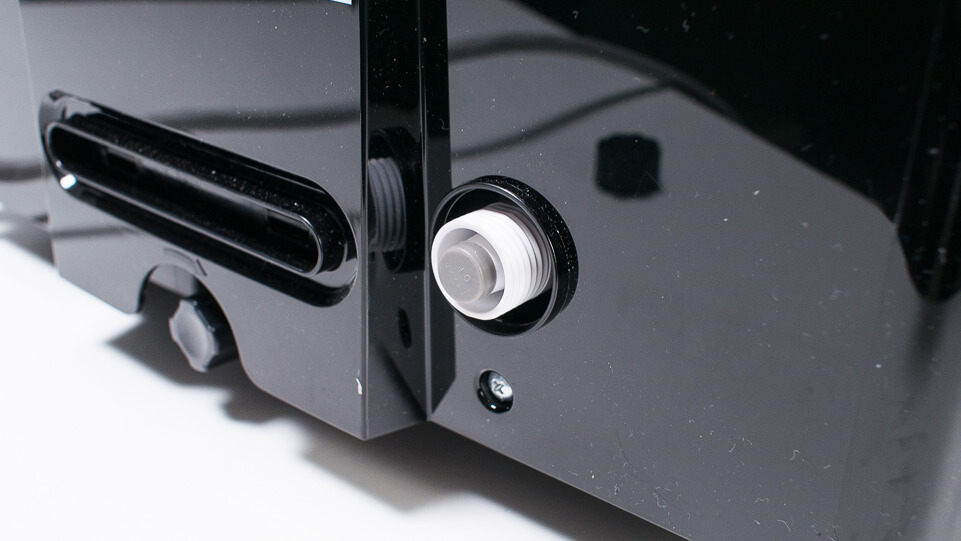
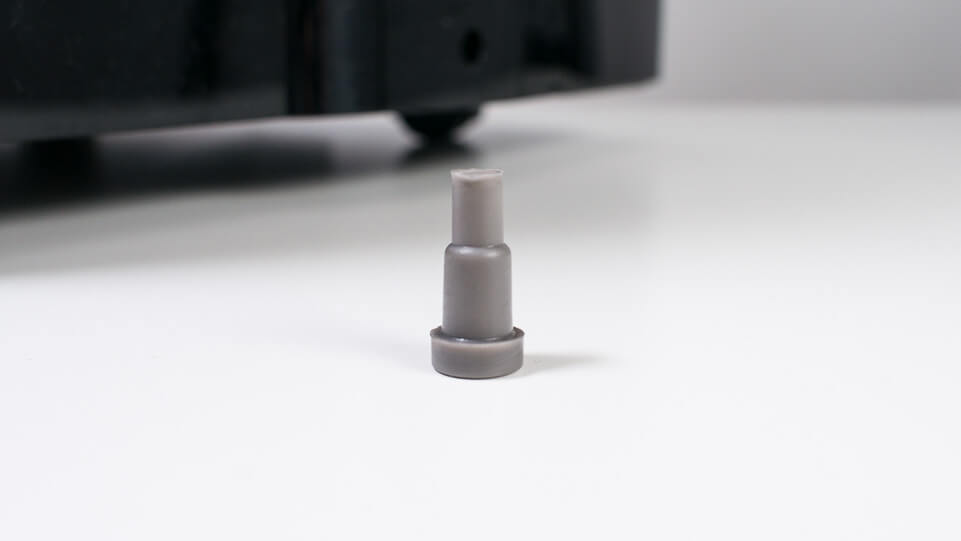
Drainage options - 3x drain outlets - one higher up on the back of the unit (for drainage on dry mode) and two towards the bottom of the unit (one for cool/dry mode overflow - unit will beep 8 times and display "P1" if you need to drain in especially humid conditions; other outlet is only on the MAP14HS1TBL – for use on heat mode)
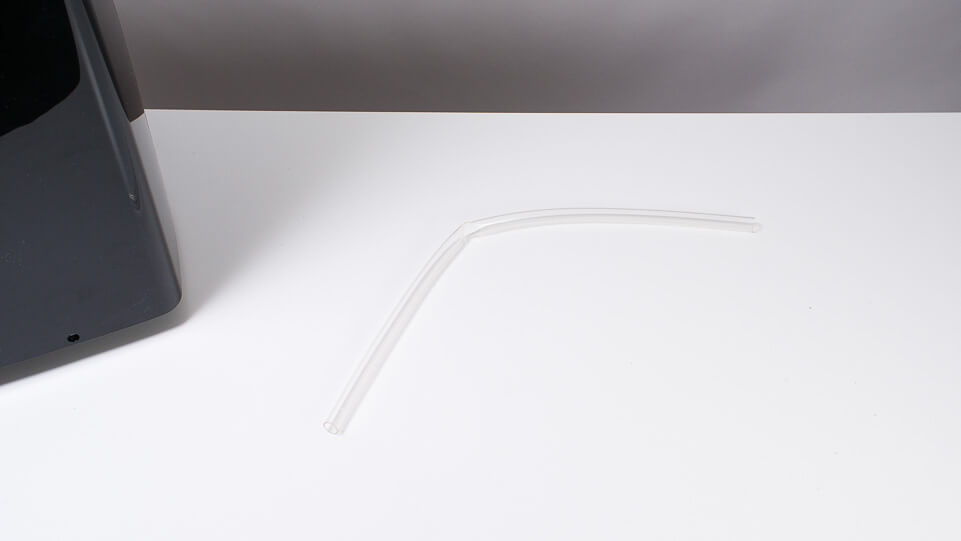
Drain hose – included (length is 23.5")
Notes
The Duo also works very well to dehumidify air. For comparison, the average stand-alone portable dehumidifier can remove only about 50 pints of moisture from the air per day.
Note that you do have to have a drain hose (included) attached to use this unit when using it on dry (dehumidifier) mode. It doesn’t have a bucket that collects condensate like a portable dehumidifier.
You probably won’t need to have a drain hose attached when using this unit on cooling (air conditioning) mode. Moisture will self-evaporate. You will only need to connect a drain hose if you use the unit in an especially humid environment (if it cannot evaporate moisture fast enough).
Filters
Top filter (over evaporator) - very easy to remove – clips in with no screws
Bottom filter (over condenser) – NA (there is no filter over the condenser)
Add a Comment
Have a question or comment? Let us know below.

Comments